
What Is Brand Activation? Definition, Types and How It Differs From Experiential
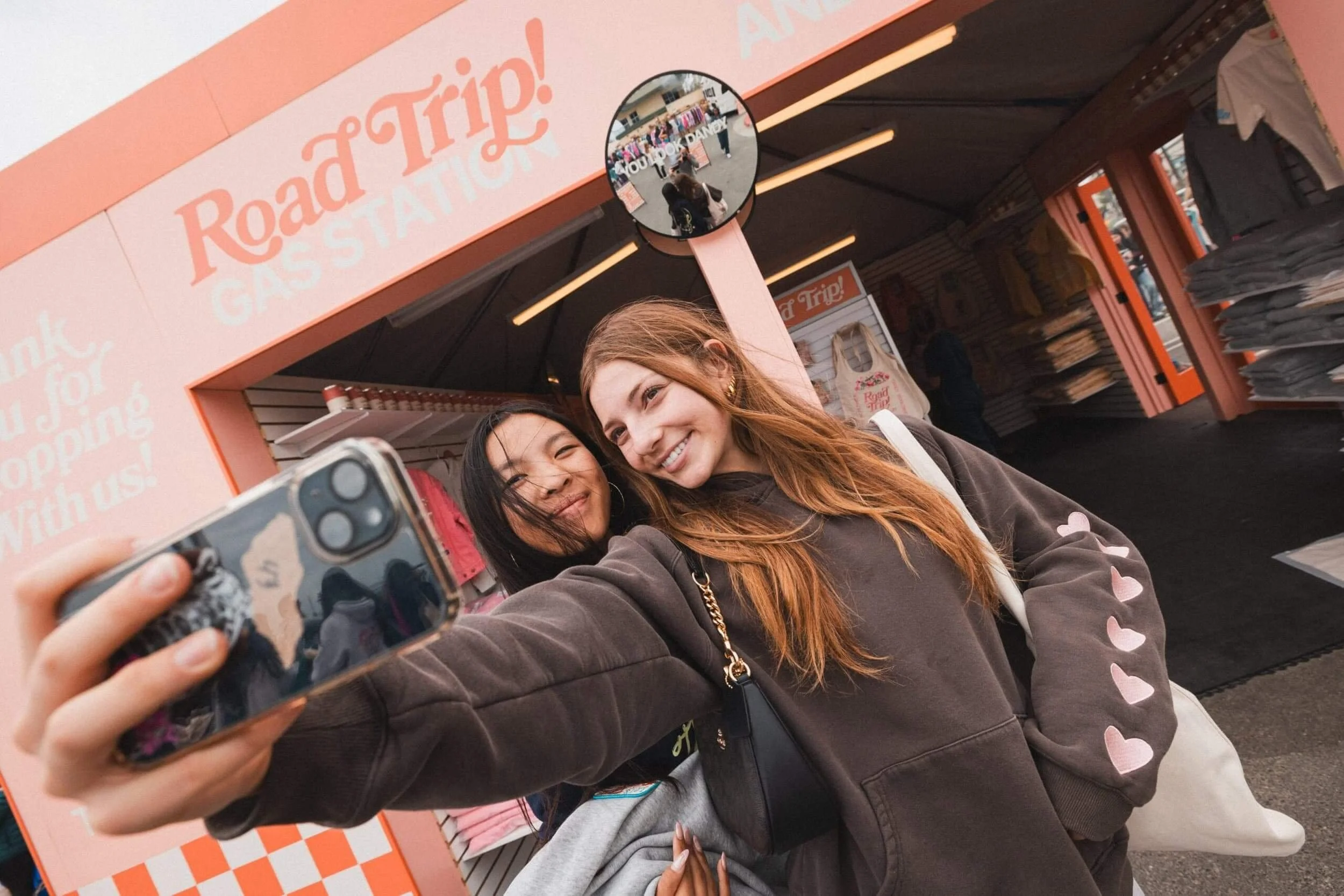
Experiential marketing setup for Dandy’s Roadside Oasis.
Brand activation is marketing that gets people to interact with a brand and take a specific action. It either has a consumer try a product, visit a store, scan a code, sign up, or buy a product. It turns awareness into participation. Instead of simply telling people a brand exists, an activation gives them a reason to experience it.
In practice, brand activation usually happens in the real world: a sampling program outside a gym, a pop-up in a busy shopping district, a product demo at retail, or a street team on campus. The best activations are built around one clear action and make that action easy to take.
Brand activation meaning
The simplest brand activation meaning is this: a campaign designed to activate a specific consumer behavior.
That behavior might be trying a product for the first time, buying it at retail, downloading an app, joining a loyalty program, visiting a store, or remembering the brand when it is time to purchase. An activation gives people a reason to do one of those things now, rather than someday.
A brand activation is not just “an event.” An event can be part of an activation, but the activation is the strategy behind it: the audience, the location, the interaction, the message, and the action you want people to take.
Awareness makes people familiar. Activation makes people act.
What is a brand activation in marketing?
In marketing, a brand activation sits closer to the purchase decision than most advertising.
A digital ad can introduce a product. A TV spot can build familiarity. A brand activation puts the product in someone’s hands, answers questions in person, removes doubt, and gives them a reason to act now.
For example, a beverage brand can run ads about a new flavor. A brand activation lets someone taste it, hear why it is different, receive a coupon, and find it at a nearby store. That is a much shorter path from attention to purchase.
Brand activation marketing works because it creates a moment of contact. People can ask questions, see the product being used, and make a decision with fewer unknowns.
Brand activation vs. experiential marketing
People often use “brand activation” and “experiential marketing” interchangeably. They overlap, but they are not the same thing.
Experiential marketing is the broader discipline. It creates experiences that make a brand feel real, human, and worth remembering. Brand activation is often the commercial outcome of that work: turning an experience into trial, purchase, leads, or another measurable action.
A strong program does both. It creates an experience people want to be part of, then gives them a clear next step. An immersive festival installation might build affinity, but it becomes a brand activation when it also drives samples, sign-ups, sales, or content that moves people toward purchase.
7 types of brand activation
There are many ways to activate a brand. These are seven of the most useful formats, each with a different job.
1. Product sampling
Sampling is the most direct form of brand activation. You put the product into the hands of the right person, in a place where they can try it and act on it.
It works best when the sample is tied to context. Coffee belongs near commuters. A sports drink belongs near a race. A snack belongs on campus. A premium food product belongs at a farmers market, where people are already in a food-discovery mindset.
Our Kopiko Focus Coffee sampling activation in Los Angeles introduced a high-energy coffee candy through direct, high-traffic sampling. The format made trial immediate: brand ambassadors, a clear product story, and consumers who could try the product on the spot.
Sampling is especially useful for CPG, beverage, snack, supplement, and new-product launches.
2. Mobile tours
A mobile tour takes one activation concept across multiple cities, retailers, campuses, or events. Instead of asking consumers to come to the brand, the brand travels to them.
Mobile tours are useful for regional launches, seasonal products, and brands entering new markets. They also create repetition. The same clear experience can be delivered in the neighborhoods, stores, and events where the audience already spends time.
Our Pocari Sweat field marketing program shows how consistent on-the-ground activity can introduce a Japanese beverage brand to U.S. consumers market by market. The program focused on direct contact and local presence rather than relying on advertising alone.
This format works well for beverage, CPG, retail, automotive, and market-expansion campaigns.
3. Pop-up activations
A pop-up activation creates a temporary physical space built around a specific brand idea. It can sell product, launch a collection, host a collaboration, or give people a reason to engage with a brand in person.
The best pop-ups are not miniature stores. They have one clear concept, a reason to visit, and a reason to share. A pop-up should feel like a destination, not a smaller version of a retail aisle.
Our Dandy Worldwide Roadside Oasis pop-up built a summer destination around the brand’s world. The space gave people something to experience, photograph, and talk about—not just a place to browse.
Pop-ups are especially effective for fashion, beauty, lifestyle, food, entertainment, and direct-to-consumer brands.
4. Retail activations
Retail activations happen where purchase decisions are made. They can include in-store sampling, product demonstrations, branded displays, weekend takeovers, and ambassador-led education.
The goal is simple: interrupt the shopping routine long enough to make the product easy to understand and easy to buy. Show the benefit. Answer the question. Make the next step obvious.
Our Oishii farmers market activation used tasting and conversation to introduce a premium product in a food-focused retail environment. The setting matched the purchase mindset: people were already shopping, tasting, and deciding.
Retail activations work well for CPG, beverage, beauty, wellness, and premium food brands.
5. Street teams and guerrilla marketing
Street teams put trained brand ambassadors into the places where an audience naturally gathers: campuses, transit hubs, events, business districts, and cultural moments.
Guerrilla marketing adds surprise. A stencil, an unexpected giveaway, a useful branded moment, or a well-timed product drop can make people stop and pay attention. The difference between good and bad guerrilla marketing is purpose. The surprise should make the product benefit clearer, not just louder.
Our campus guerrilla marketing program used street-level presence to reach students where they already were. There was no stage and no long line. Just the brand in the right place at the right time.
This approach suits youth brands, apps, beverage, entertainment, and local-awareness campaigns.
6. Influencer and launch events
Launch activations give a new product a public moment. They can include press, creators, tastings, demos, performances, or immersive product reveals.
The key is content. Creators need a reason to film, a story to tell, and a product moment worth showing. A launch event should produce more than a guest list; it should produce usable content, conversations, and word of mouth.
Our Monster Energy Fantasy Ruby Red campaign used an experiential launch built for participation and social reach. The product remained the centerpiece of the experience.
Launch events are especially useful for beverage, beauty, fashion, gaming, entertainment, and new-product introductions.
7. Sponsorship activations
A sponsorship activation turns a sponsorship into a brand experience. Instead of placing a logo near an audience, the brand creates something useful, fun, or memorable within the event.
The activation should match the audience’s mindset. At a race, that might mean performance and energy. At a music festival, discovery and escape. At a community event, usefulness and belonging.
A sponsorship becomes an activation when the brand gives people something to do, taste, try, or remember—not just something to walk past.
What makes a brand activation work?
A brand activation works when five things line up: a specific audience, the right location, one clear message, a real interaction, and a next step.
The audience cannot be “everyone.” It needs to be a defined group with a real habit, need, or problem. The location should be where that audience already is, in a mindset that fits the product. The message should be simple enough that someone can repeat the benefit after ten seconds.
The interaction is what separates activation from advertising. People should taste it, test it, build it, play it, wear it, or ask about it. Then the activation needs a next step: buy now, scan, redeem, visit, sign up, follow, or find the product at retail.
The next step is where many activations fail. A crowd is not a result. A queue is not a result. Samples handed out without a path to purchase are only half a program.
How to measure brand activation
Measure the activation against the action you designed it to produce. If the goal was trial, track samples distributed, trial rate, and follow-up purchase behavior. If the goal was retail velocity, track coupon redemptions and sales lift in targeted stores or markets.
Other useful measures include QR scans, store-locator clicks, leads, sign-ups, app downloads, opt-ins, social content created, earned reach, and cost per acquisition. Where the budget supports it, brand recall and purchase-intent research can show whether the experience changed perception as well as behavior.
The measurement plan should exist before production starts. Decide what success looks like, then build the activation to capture it.
Experiential programs are increasingly judged this way. EventTrack’s 2026 forecast found that 98% of consumer event marketers say ROI from experiential programs is the same or increasing compared with the prior year. That only means something when the program is designed to produce measurable outcomes.eventmarketer
When does a brand need an activation agency?
A brand can run a small internal activation. But an agency becomes necessary when the program needs to work across markets, venues, staff, permits, fabrication, logistics, and measurement.
You likely need an activation agency if the program runs in multiple cities or venues, requires trained brand ambassadors at scale, involves permits or insurance, needs custom fabrication or a mobile tour vehicle, or must coordinate with retailers, campuses, and event organizers. An agency is also valuable when the activation needs to produce data, leads, or sales lift—not just attendance.
A good agency does not just build the thing. It protects the idea through production. Great concepts die when staffing, permits, logistics, and measurement are treated as afterthoughts.
Brand activation examples from Evolve
We build activations that connect strategy to execution. Our work spans sampling, mobile tours, pop-ups, retail programs, campus marketing, and product launches.
Our Kopiko Focus Coffee sampling in Los Angeles created immediate product trial in a high-traffic market. Our Pocari Sweat field marketing helped build U.S. awareness for a Japanese beverage brand. Our Dandy Worldwide Roadside Oasis pop-up turned a seasonal brand idea into a physical destination.
We have also activated premium food through Oishii’s farmers market program, reached students through campus guerrilla marketing, and built a launch experience for Monster Energy Fantasy Ruby Red.
See more in our case studies and our guide to brand activation ideas for 2027.
FAQ
What is brand activation?
Brand activation is marketing designed to get people to interact with a brand and take an action, such as trying a product, buying it, signing up, or visiting a store. It turns awareness into participation.
What is a brand activation in marketing?
In marketing, a brand activation is a campaign or experience built around a specific consumer behavior. It usually happens in person through sampling, events, pop-ups, retail programs, demos, or street teams.
What is the difference between brand activation and experiential marketing?
Experiential marketing creates memorable brand experiences. Brand activation focuses on turning those experiences into action, such as trial, purchase, leads, or sign-ups. The two often work together.
What are examples of brand activation?
Examples include product sampling, mobile tours, pop-up shops, retail demos, campus street teams, influencer launch events, and sponsorship activations.
When should a brand use an activation agency?
Use an activation agency when the program requires multi-market logistics, staffing at scale, permits, fabrication, retail coordination, or measurement. Agencies handle strategy through execution so the brand team does not have to manage every moving part.
Turn attention into action
A brand activation should do more than make people notice you. It should make it easy for them to try, buy, share, or remember your product.
We handle strategy through execution with one team—from concept and staffing to production, logistics, and measurement.
Planning a sampling program, mobile tour, pop-up, or launch? Tell us what you’re trying to do →
