
From Render to Reality: Building Dandy's Roadside Oasis
How a vintage gas station concept became a mobile, highly detailed retail experience while preserving the creative vision through design and fabrication.
The best experiential fabrication creates a kind of temporary magic. Guests walk into a fully formed world, interact with it and photograph it without seeing the months of decisions underneath. They do not see the engineering hidden inside an awning, the shelving designed around an unknown product count or the storage concealed behind freezer doors.
For Dandy Worldwide's Roadside Oasis, those invisible decisions were what made the visible experience possible.
In an interview for this story, Creative Director, Travis Radke walked through the project from its earliest client conversations and 2D planning to 3D modeling and fabrication. His account provides the details of how Evolve translated Dandy's idea into a touring physical experience.
Dandy came to Evolve Activation looking for more than an agency that could produce individual events. The lifestyle brand wanted a leadership partner capable of guiding the program through site selection, permitting, creative development, fabrication and transport.
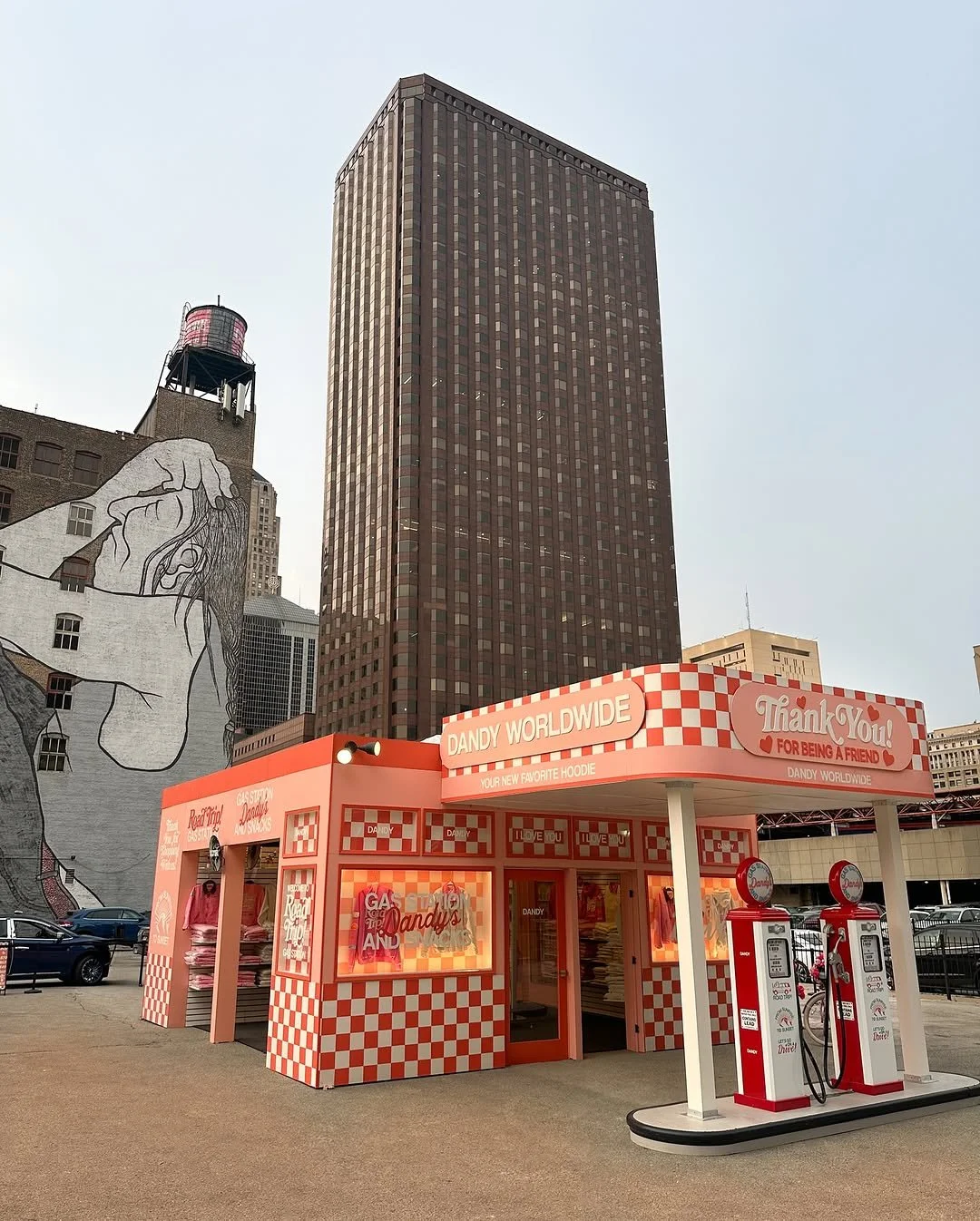
The concept was ambitious: create a temporary touring set that looked and functioned like a vintage gas station and convenience store. Using an Old Hollywood approach, Evolve designed a convincing storefront facade around a fully shoppable Dandy retail experience. The structure needed to feel permanent to guests while being built to come apart, travel and be reset in each market.
The finished experience would eventually appear in Huntington Beach, Santa Monica, Seattle, Chicago and New York City. But before it could hit the road, the team had to answer a more fundamental question: How do you build something temporary that feels completely real?
Selling the possibility before rendering the details
As Radke explained, Roadside Oasis followed an unusual creative path. Rather than beginning with a fully developed set of 3D renderings, the early conversations centered on partnership, capability and proof of execution.
Evolve showed Dandy a previous build created for Amazon Prime: a fabricated video store designed to read like a permanent storefront. Built within a 40 by 40 foot event tent, it used aluminum windows and doors, wall flats and a detailed facade to create the illusion of a real store. The approach drew from old Hollywood film sets. The team constructed what the audience needed to see and made every visible element convincing.
That project gave Dandy a tangible example of what was possible. More importantly, it demonstrated that Evolve understood how to translate a branded idea into a believable physical environment. The team was not simply proposing a scenic backdrop; it was offering to guide Dandy through the full process.
Once the partnership was established, the concept began taking shape through 2D designs and detailed working sessions. Dandy and Evolve discussed the interior and exterior walls, the retail flow and the visual Easter eggs that would make the space feel rewarding to longtime fans. They developed the point of sale system, product displays, photo opportunities and guest interactions as parts of one coherent brand world.
Designing a gas station that worked like a store
The creative goal was specific: the Roadside Oasis should feel like a real gas station, but a charming, stylized version rather than the gritty, purely functional environment guests might encounter on an actual road trip.
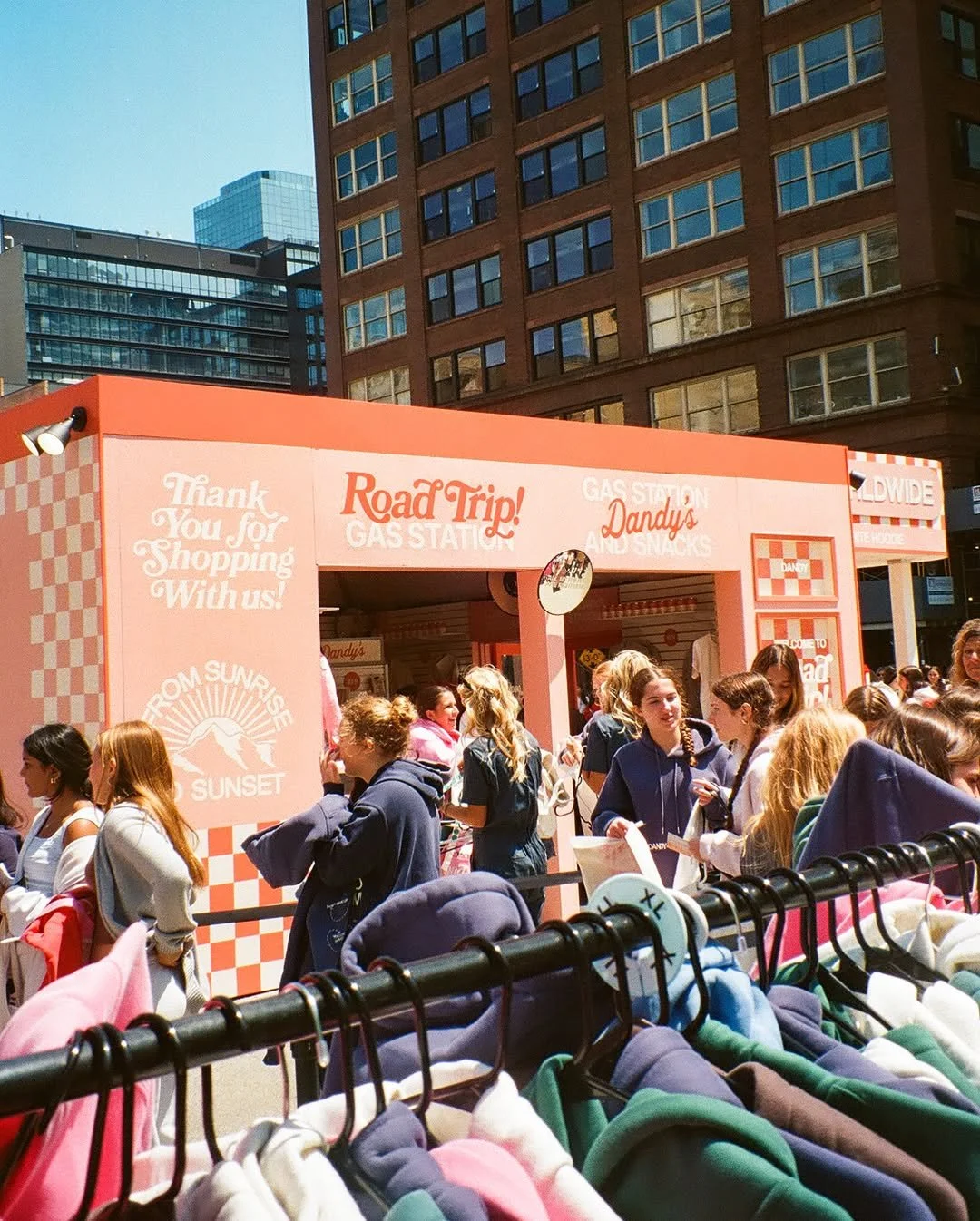
Retro fuel pumps became photo moments. Newspaper stands and fabricated food products added layers of world building. A scratch off ticket introduced an element of surprise, while a coded ice machine dispensed gifts, samples and custom prizes. Because Dandy is known for its patches, the team also created a customization bar where guests could personalize hoodies with embroidered designs.
Every element had to contribute to the experience while supporting the practical demands of a functioning store. Even back of house storage became part of the visual story. Rather than allowing supply boxes and operational materials to interrupt the environment, the team concealed storage behind oversized freezer doors. A necessity became another convincing piece of the gas station illusion.
The merchandise displays presented a different challenge. The types of apparel were known, but the exact inventory and quantities could change by market and might not be finalized until shortly before each activation. Fixed shelving would have locked the team into assumptions that might not hold up on site.
The solution was a grooved wall system with movable shelves. Displays could be reconfigured around the products available at each stop, giving the activation flexibility without making it look improvised. That small design decision captures an essential principle of successful experiential fabrication: the strongest creative solutions account for real operational variables from the beginning.
Bringing fabrication into the conversation early
Experiential concepts often lose crucial details when they move from the creative team to an outside fabricator. A design may look compelling on screen but prove too heavy, too fragile, too time consuming to assemble or too expensive to reproduce as drawn. By the time those problems surface, the solution may be a compromise that visibly changes the look of the set and leaves the client with something different from the design they approved.
For Roadside Oasis, the event fabrication team became involved early. They could flag details that needed to change, recommend buildable alternatives and help shape features such as the adaptable display walls before the design was locked. Creative intent and physical execution developed together.
That collaboration was especially important because the set had to tour. Every component had to balance appearance with durability, transportation and assembly time. A convincing permanent looking structure is one challenge. Building that structure so it can be packed, moved and rebuilt repeatedly adds another layer of complexity.
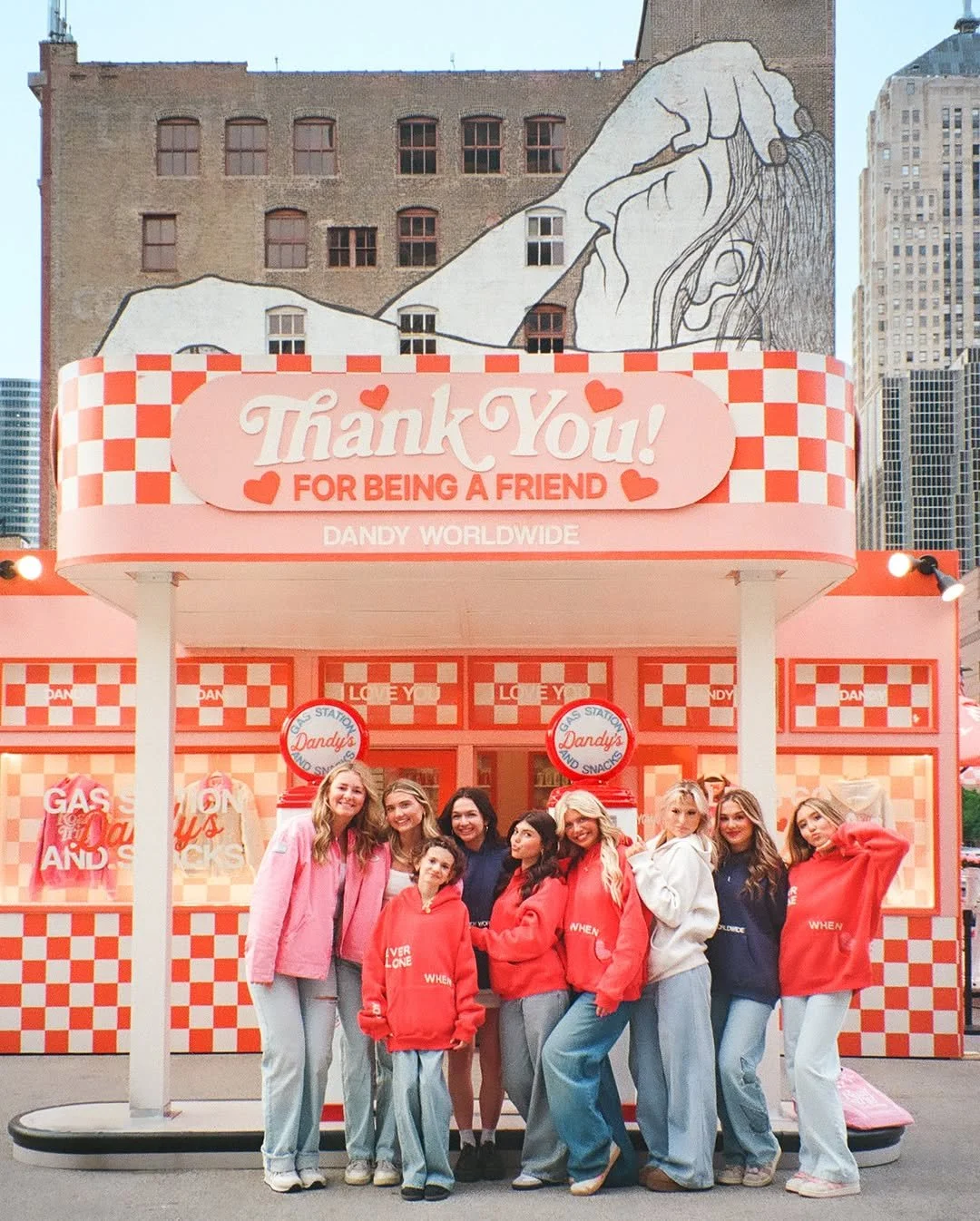
The awning was the most complex example. Visually, it needed the weight and presence of part of a real building. It also needed to be efficient to assemble so it would not require additional venue days. The fabrication team created a custom aluminum frame rather than relying on plywood, then detailed it to look solid and substantial.
The result preserved the architecture of the original idea while reducing assembly time. That planning approach also reflects Evolve's broader process for creating a pop up brand experience.
Using 3D rendering during client meetings
After the CAD drawings were approved, Evolve developed the concept into a detailed 3D model. The model did more than provide a polished preview. It allowed the team and client to virtually move around the exterior, enter the store and view the environment at guest level.
The software is typically used as an architectural tool, but in client meetings it became something more immediate: a shared workspace. Instead of collecting feedback, leaving the meeting and returning later with a revised static image, the team could rotate the structure, test a sightline or move an element in real time.
That made the model useful for both creative and operational decisions. Dandy could evaluate the experience from the perspective of a fan approaching the activation, shopping inside it or stopping at a photo moment. Evolve could use the same model to protect spatial logic and confirm that the design remained buildable.
The finished activation stayed remarkably close to that model. The primary changes involved the height of the walls and refinements to the awning. The amount of printed graphics also increased significantly as the client saw the visual system coming together and identified more opportunities to extend it through the space.
Minor changes are inevitable in event design and 3D rendering. The more meaningful measure is whether the physical build delivers the experience the render promised. As Travis Radke explained during the project interview, producing a finished set that looks like the model the client originally approved is the baseline for a successful experiential experience.
Building for the fans who would notice every detail
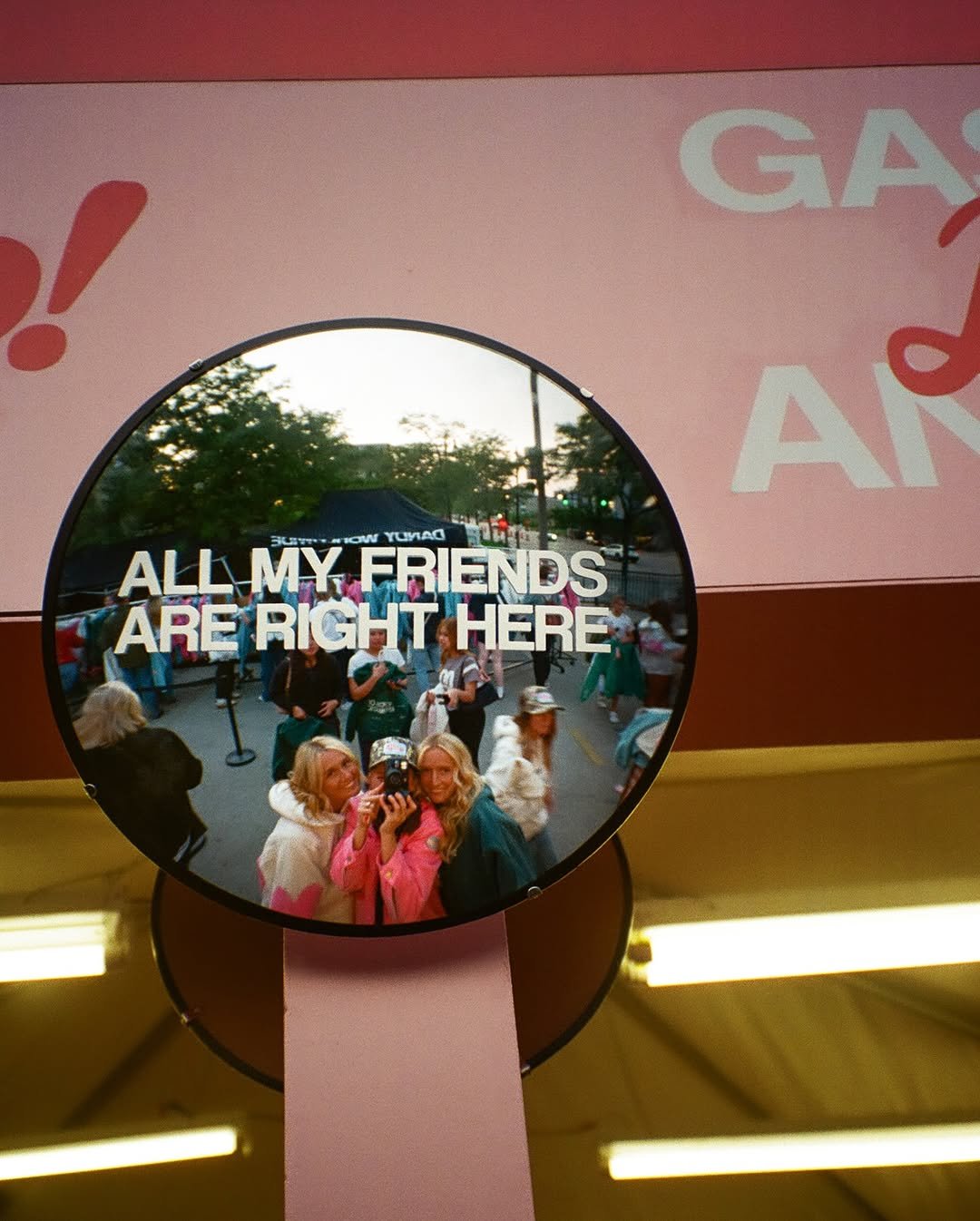
Dandy was not trying to create the most generic experience for the largest possible audience. Roadside Oasis was designed to feel special to the brand's core community. It brought an identity that had lived primarily through ecommerce and social media into the physical world.
That made authenticity more important than sheer scale. Hardcore fans would recognize the patches, discover the Easter eggs and understand why the familiar products and brand cues mattered. New guests could still enjoy the retro environment, but the people closest to the brand would feel that it had been made for them.
The response showed the power of that focus. Radke recalled that in Chicago, the line wrapped around a city block twice. For a production team, there is always a moment of uncertainty before an event opens: Will people come? Seeing that turnout answered the question at a completely different level.
Across the campaign, the Dandy Roadside Oasis turned online affinity into an experience fans could enter, shop and share. It also demonstrated what becomes possible when a brand chooses an agency partner equipped to carry one idea from the first conversation to the 3D model and finished touring set.
The final achievement was not simply that Evolve built a convincing vintage gas station. It was that the team built one capable of moving, adapting and reopening in city after city while continuing to feel like Dandy. The render and the finished set aligned because creative ambition and execution had never been separated in the first place.
Render it. Build it. Tour it.
Got a concept that has to survive five cities and still look permanent in every one? Bring us the sketch. We’ll show you the model, then build the thing.