
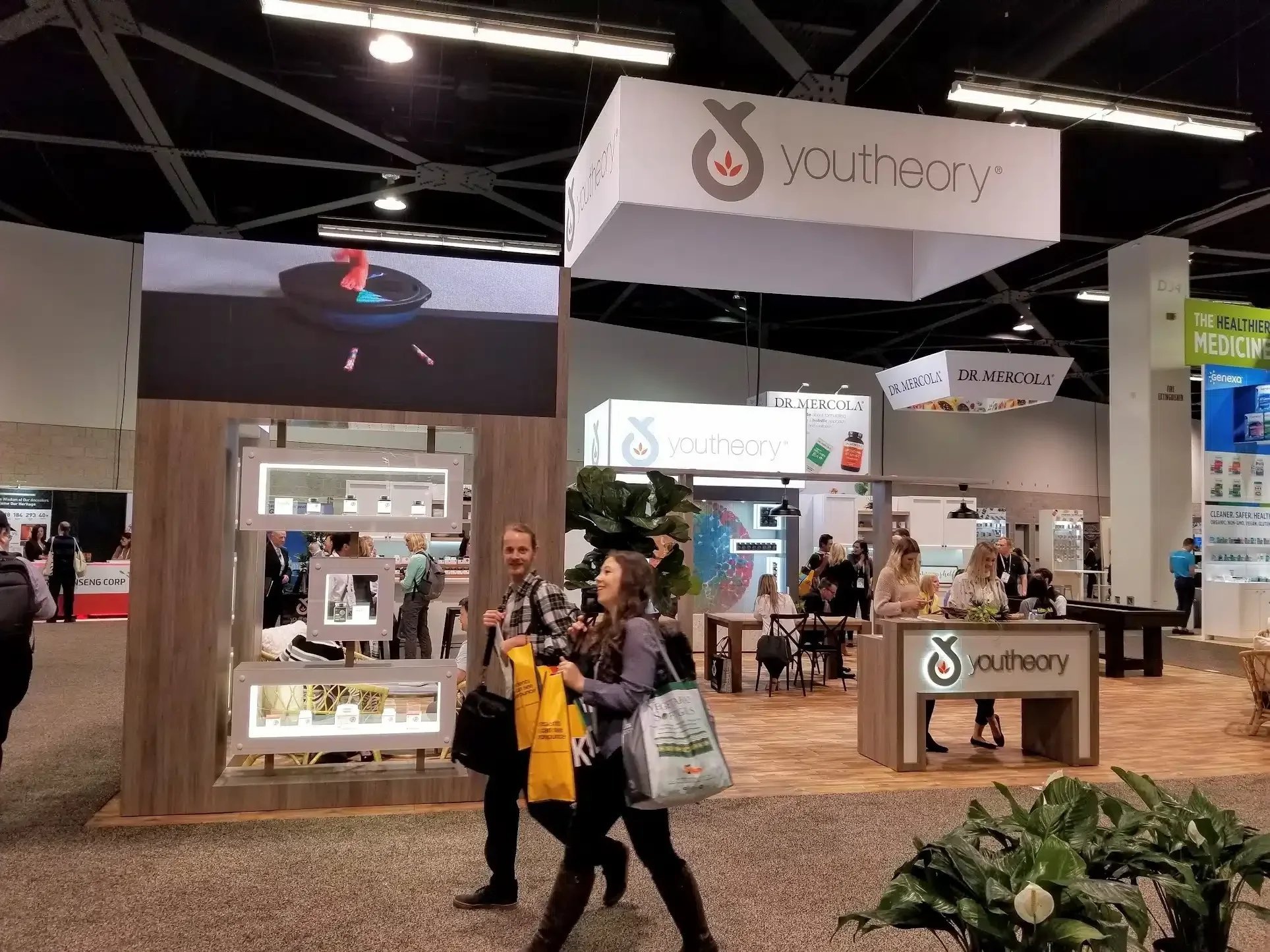
Experiential marketing setup for YouTheory
Most trade show marketing is wasted spend.
Not because trade shows do not work. They do. The problem is that too many companies confuse buying booth space with having a strategy. They book the space, build something that looks good in a rendering, ship in a few giveaways, scan badges, and hope the sales team finds value in the list afterward.
That is not a trade show marketing strategy; infact it is an expensive attendance plan.
A booth earns its cost when it creates the right conversations, gives visitors a reason to stay, and turns those conversations into a real next step. Strategy first. Then spectacle.
Start With the Result, Not the Footprint
The first question is not whether you need a 10-by-10 booth, an island build, or a sponsorship package. It is what the event needs to achieve for the business.
Maybe you need meetings with a short list of target accounts. Maybe a new product needs live demonstration before buyers will take it seriously. Maybe your sales team needs face time with decision-makers who are difficult to reach through email and LinkedIn. Choose the primary outcome first. It will shape the event you choose, the experience you create, the people you staff, and the way you follow up.
If the goal is qualified opportunities, define what that means before the event. A badge scan is not automatically a qualified opportunity. Neither is someone who takes a giveaway, enters a contest, and disappears into the show floor.
A qualified prospect may be a decision-maker from a target account with a relevant need, a credible timeline, and an agreed next step. That definition gives your team something useful to work toward.
Then work backward. If you need 40 qualified opportunities and one in four meaningful conversations typically meets that standard, you need around 160 useful conversations during the event. Now you have a basis for staffing, demonstration capacity, traffic goals, and lead capture.
Build the Trade Show Marketing Strategy Before the Booth
A booth should make your strategy visible. It should not be expected to invent the strategy.
Start with the people you need to meet. Not everyone attending the show. Name the roles, industries, company sizes, and target accounts that matter. Then be clear about what those people need to understand. In a loud exhibition hall full of competing messages, visitors should quickly grasp what you do, who it is for, and why it matters to them.
The next question is where many exhibitors fall short: why should someone stop now?
“Visit Us at Booth 421” is a location. It is not an invitation.
A stronger invitation gives people a reason to make time. That could be a live product demo, a practical consultation, a conversation with an expert, an exclusive preview, or a clear answer to a problem they are already trying to solve. It does not need to be flashy. It needs to be useful.
That also makes pre-show outreach much easier. Your sales team can invite priority accounts to something specific instead of sending a generic announcement. The best meetings should be booked before the doors open.
Make the Booth Work Like a Conversation
Trade show activation is often treated like a design project. Design matters. But it only matters if it helps people enter, understand, engage, and take the next step.
From the aisle, the booth needs to make a clear promise. Once someone steps inside, it should make interaction easy. That may mean a quick demo, a guided walkthrough, an interactive tool, or a conversation with someone who knows the product inside out.
The right format depends on what you sell. The principle does not change: give visitors something they cannot get by reading your website later.
Your team matters just as much as the physical environment. A polished booth cannot compensate for staff members hiding behind counters, checking their phones, or repeating the same pitch to every passerby. The best booth teams know how to start a conversation, listen for real signals, and connect each visitor with the right person.
Our Trade Show Talent service supports that work on the floor. Trained event teams can welcome attendees, manage traffic, support demonstrations, and keep the experience warm and organized while your internal team focuses on qualified conversations.
For larger builds, complicated programming, and high-stakes launches, Executive Production makes sure the experience works when the show floor gets busy. Great ideas die in production. Ours do not.
Capture Context, Not Just Contacts
The goal is not to leave with the biggest list. It is to leave with information your sales team can actually use.
Every meaningful conversation should produce useful context: who the person is, what they care about, what problem they are trying to solve, where they are in the buying process, and what should happen next. That does not require a form so long that it ruins the interaction. It requires a simple process that the entire team understands and uses consistently.
For priority prospects, do not let “follow up after the show” become the default. Book the next meeting while the conversation is still fresh. Put it on the calendar. Confirm who owns it. Make the next step real before the visitor walks away.
This is where a trade show activation becomes more than a busy booth. It becomes a sales tool.
Follow-Up Is Where the Return Is Won
Trade show marketing does not end when the booth comes down. In many cases, the event itself is the easy part. The harder work is turning strong conversations into momentum after everyone goes home.
Marketing, sales, and event teams need to agree on lead definitions, routing rules, owners, and follow-up timing before the show begins. A priority prospect needs personal outreach within 24 hours, with a message that reflects the conversation that actually happened.
A generic “great meeting you at the show” email sent to hundreds of people is not relationship-building. It is inbox clutter.
Not every contact deserves the same follow-up. Some are ready for a sales conversation. Others need a useful resource, a product demonstration, or more time. Segmenting your follow-up by intent keeps the message relevant and helps your sales team focus energy where it counts.
Measure What Matters
Badge scans and booth traffic are helpful signals. They are not the result.
A stronger trade show marketing strategy tracks the full path from attention to pipeline: meaningful conversations, product demonstrations, meetings booked, qualified leads, target-account engagement, opportunities created, pipeline influenced, and revenue where possible.
Cost per qualified lead and cost per opportunity can help compare the event with other marketing channels. But trade shows can also strengthen existing relationships, accelerate live deals, create partner opportunities, and give your team direct market intelligence. Those outcomes matter too.
Measurement needs to start before the event. If your teams have not agreed on what qualifies as a lead, how leads will be routed, and how opportunities will be tracked, the report will be weak no matter how impressive the booth looked.
The People on the Floor Are Part of the Product
The live team shapes how attendees remember your brand. They set the tone, welcome visitors, solve small problems before they become noticeable, and create the conditions for valuable conversations.
Our work supporting OnDeck’s MLB activations reflects that standard. The program required reliable, polished field teams who could represent the brand confidently in a fast-moving live environment. Trade shows demand the same level of care.
When your people understand the objective, know the brand, and can connect naturally with attendees, the activation works harder. When they do not, even the best-looking booth becomes expensive scenery.
If you are evaluating a B2B event marketing agency, look beyond the booth rendering. Ask how they handle staffing, live operations, production, lead flow, and reporting. The details decide whether the investment becomes a credible sales tool or a missed opportunity.
FAQ
What Is Trade Show Marketing?
Trade show marketing is the use of conferences and industry events to meet prospective customers, demonstrate products, build relationships, and generate measurable business opportunities. It includes pre-show outreach, the live booth experience, and structured follow-up after the event.
How Do You Make a Trade Show Booth Successful?
Start with a defined business outcome and a clear audience. Create a message that makes sense quickly, give attendees a useful reason to stop, staff the booth with people who can hold real conversations, and make the next step easy to take.
How Do You Measure Trade Show ROI?
Measure meetings, qualified leads, opportunities created, pipeline influenced, and revenue where possible. Do not rely only on foot traffic or badge scans. Agree on lead definitions and tracking rules before the event so your teams capture information sales can use.
What Should Trade Show Staff Do?
Trade show staff should welcome attendees, start relevant conversations, guide visitors through the experience, recognize strong opportunities, capture meaningful notes, and make clean handoffs to sales or product experts. They should not wait behind a counter for people to approach them.
When Should Trade Show Follow-Up Happen?
Priority prospects should receive personal follow-up within 24 hours. Other qualified contacts should receive relevant follow-up within a few days, while the event and the conversation are still easy to remember.
Make the Investment Work Harder
A great booth gets noticed. A great trade show marketing strategy gets remembered, followed up, and tied to real pipeline.
Planning a trade show activation or B2B event? We handle strategy through execution with one team. Tell us what you’re trying to do →
