
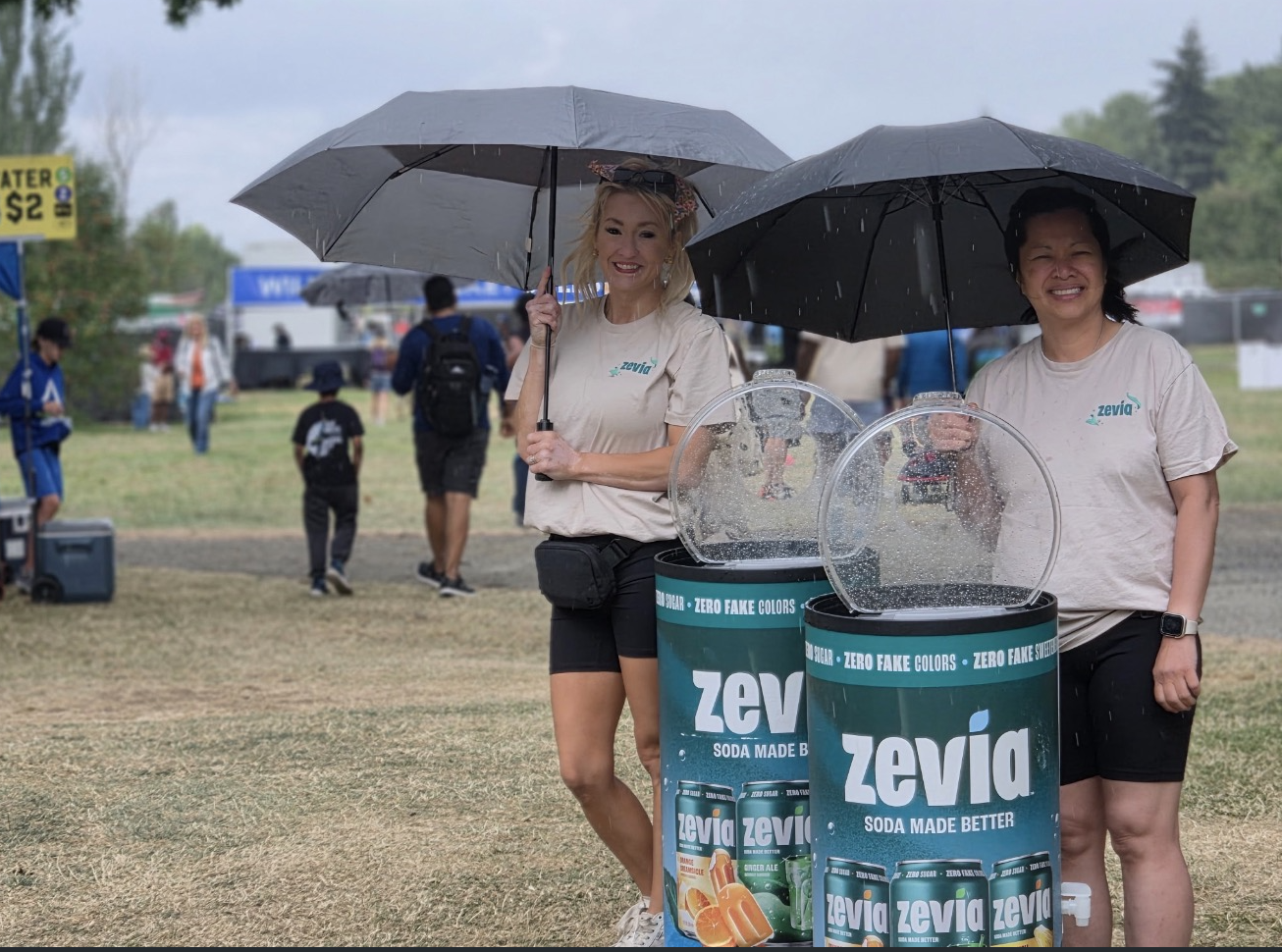
Experiential marketing for Zevia
CPG marketing succeeds when a shopper tries the product, understands why it matters, and can find it again. The best CPG experiential marketing programs do all three in one move: they put the product in the right hands, make the benefit clear, and give people a reason to buy now.
That is the job of a CPG activation. Not a photo opportunity. Not a branded tent with no purpose. A program built to create trial, accelerate velocity, and turn a first purchase into repeat purchase.
We build these programs for food, beverage, wellness, household, and emerging CPG brands. Our CPG experiential marketing work spans sampling, retail activations, mobile tours, and launch experiences designed around measurable business outcomes.
Why Trial Is the CPG Metric That Matters
CPG brands do not win because people saw an ad. They win when someone buys once, likes the product, and buys again.
Trial is the bridge between awareness and loyalty. It removes the biggest barrier to purchase: uncertainty. A shopper may like your packaging, recognize your brand, and agree with your positioning, but still hesitate to spend money on an unfamiliar product.
Product sampling marketing solves that problem directly. It gives the consumer a low-risk way to test the product and gives the brand an opportunity to explain the benefit at the exact moment of consideration.
Sampling is especially powerful for CPG because taste, texture, scent, and immediate use matter. A cracker, beverage, cheese, skincare product, supplement, or household item often needs to be experienced before a shopper commits.
In-store product sampling drives an average 475% sales lift on the day of the event and a 74% cumulative lift over the following 20 weeks.
That does not mean every sampling program delivers those results. It means sampling, when targeted and executed well, can be one of the most efficient ways to create trial in CPG.
What CPG Experiential Marketing Actually Does
CPG experiential marketing is not “free stuff.” It is a structured program that connects a product to a consumer at a moment when trial can change behavior.
A strong program answers four questions before anyone builds a booth, books a venue, or hires a brand ambassador.
Who needs to try the product?
Where do they already make decisions about this category?
What barrier stops them from buying?
What action should they take after the experience?
The answers determine the format. A new beverage may need high-volume sampling near purchase occasions. A premium food brand may need a more considered retail or farmers market experience. A product launch may need a multi-market program that creates awareness, trial, and retail pull-through at the same time.
We build every program around the objective first. Then we design the experience, staffing, logistics, and measurement to support it.
Product Sampling: The Fastest Path to Trial
Product sampling is the most direct form of CPG activation. You put the product into the right person’s hands, explain the reason to believe, and create an immediate opportunity to purchase.
The mistake is treating sampling as distribution. Handing out 10,000 units is not a strategy. The question is whether the right 10,000 people received the product in a context that made them more likely to buy it.
Make the Sample Useful
A sample should solve a real consumer question.
For a beverage, that may be: “Does this taste good enough to replace my usual drink?” For a snack, it may be: “Is this actually satisfying?” For a household product, it may be: “Does this work better than what I already use?”
The sampling experience should make the answer obvious in seconds.
Match the Location to the Purchase Occasion
Location is strategy.
A gas station can be the right place for an energy product purchased on the go. A farmers market can be the right place for a premium food product where shoppers are already open to discovery. A grocery store can be the right place for a new SKU that needs to interrupt a routine purchase.
In-store sampling works because shoppers are already in a buying mindset. It can introduce a new product, explain a benefit, and move the shopper directly to the shelf.
Train the People Handing Out the Product
Brand ambassadors are not human dispensers.
They need to understand the product, the target shopper, the key benefit, and the call to action. A good ambassador can turn a sample into a conversation. A great one can turn a conversation into a purchase.
Evolve Proof: Kopiko Turned Sampling Into a Purchase Moment
Kopiko came to us with Focus Coffee, a product that needed to reach consumers in a high-energy, on-the-go context. We built a sampling activation in Los Angeles around gas stations, a location tied directly to the product’s use case.
Students who bought a $2.99 package of Kopiko Focus Coffee could receive up to $70 in fuel. The program turned sampling into a transactional exchange: try the product, then receive a meaningful reward.
The activation reported 9,000 gallons of fuel distributed, 119 million in audience reach, 43 million social media views, and 950,000 onsite impressions.
The lesson is simple. Sampling works best when the reward, location, and product benefit reinforce one another. Kopiko did not just hand out candy. It created a reason for the target consumer to buy, try, and talk about the product.
Read the full Kopiko sampling activation in Los Angeles.
In-Store Sampling: Turn Shelf Presence Into Sales
In-store sampling is one of the most practical CPG marketing programs because it happens where the purchase decision is already being made.
The shopper is in the aisle. The product is nearby. The ambassador can answer questions, offer a taste, explain the difference, and point directly to the shelf.
But in-store sampling only works when it is treated as a sales program, not a giveaway.
Get the Placement Right
The sampling table should be close enough to the product to make the connection obvious, but positioned where it can intercept relevant traffic.
If the product is buried in a crowded aisle, the program needs a clear path from sample to shelf. Signage, shelf talkers, and ambassador direction matter.
Time It to Shopping Behavior
A Saturday afternoon may work for a family snack. A weekday morning may work better for coffee, breakfast, or wellness products. A weekend evening may work for beverage or entertaining occasions.
Do not schedule based on convenience. Schedule based on when the target shopper is most likely to be receptive.
Measure What Happened After the Event
Samples distributed is a useful operational metric. It is not the whole story.
Track purchase lift, repeat purchase where retailer data is available, coupon redemption, QR scans, and sales in the days and weeks following the activation. A sampling program should be judged by whether it changed purchase behavior, not only by how many people tried the product.
Evolve Proof: Oishii Used Farmers Markets to Build Premium Trial
Oishii needed to introduce a premium strawberry to shoppers who might not expect to encounter it in a conventional grocery run. Farmers markets gave the brand a setting where food discovery, quality, and provenance were already part of the shopping mindset.
The activation put the product directly into consumers’ hands in an environment built around food exploration. That matters for a premium CPG product. The shopper is not just tasting a strawberry. They are evaluating freshness, flavor, appearance, and whether the product justifies a premium purchase.
See how we approached it in the Oishii farmers markets activation.
For premium food brands, the right environment can be as important as the sample itself. A farmers market, specialty grocer, food hall, or culinary event can make the product feel like a discovery rather than another item competing for attention.
Retail Activations: Make the Product Impossible to Miss
Retail activations turn a store, shelf, endcap, or shopping center into a brand moment.
They work when the goal is more than handing out samples. A retail activation can introduce a new SKU, educate shoppers on a product line, create a seasonal reason to buy, or give shoppers a reason to visit a specific retailer.
The best retail activations do three things.
They interrupt the routine. They explain the product benefit quickly. They make the next step easy.
A shopper should not have to work to understand what the product is, why it is different, or where to find it. The experience should move them from curiosity to purchase with minimal friction.
Build Around the Shopper’s Mission
Nobody walks into a grocery store hoping to attend a brand activation. They are there to buy groceries.
So the activation has to earn attention without wasting their time. A tasting station, a useful demonstration, a limited-time offer, or a visually strong product display can do that. A complicated interactive experience usually cannot.
Use the Retail Partner as a Partner
Retail activations succeed when the brand and retailer share an objective.
The brand wants trial and sales. The retailer wants traffic, basket size, category excitement, and a reason for shoppers to choose their store. Build the program so both sides win.
Evolve Proof: Zevia Created a Reason to Stay and Try
Zevia needed to introduce its zero-calorie beverages in a way that felt welcoming, social, and on-brand. At Pride, we built a colorful pop-up lounge with a sampling bar, seating, Pride décor, and photo opportunities.
Attendees could relax, connect, and try Zevia’s newest beverages in a space designed around celebration rather than a basic product handout. The activation became a Pride festival hotspot, with thousands of attendees sampling the beverages.
That is what a good retail and event sampling program does. It creates an environment where trial feels natural, not transactional.
Product Launches: Create Demand Before the Shelf
A product launch has one job: get the right people to try the product early, talk about it, and create demand at retail.
The launch program should not begin on launch day. It should begin with the audience, the retail strategy, and the story that makes the product worth trying.
A launch activation needs to answer three questions.
Why does this product exist? Why should I care? Why should I buy it now?
The answer cannot be “because it is new.” New is not a benefit. The activation needs to make the product’s difference tangible.
Use Sampling to Remove Risk
For a new product, sampling is often the highest-value tactic. It lets consumers test the product before they commit to a full-size purchase.
For a beverage, offer a cold, properly prepared sample. For a snack, offer a fresh, correctly portioned taste. For a beauty or wellness product, create a moment where the consumer can see, feel, or experience the benefit.
Make the Launch Feel Like an Event, Not an Ad
People share experiences that feel worth talking about. A launch activation should give them something to do, see, taste, or participate in.
That does not mean adding gimmicks. It means designing a moment around the product’s personality and the audience’s interests.
Evolve Proof: Monster Energy Made a Launch Shareable
Monster Energy’s Fantasy Ruby Red launch needed more than shelf placement. It needed cultural energy.
We built a viral experiential campaign around the launch, creating an experience designed to generate attention, participation, and social conversation. The program supported the product introduction by making the launch feel like an event people wanted to be part of.
See the Monster Energy Fantasy Ruby Red campaign.
For beverage brands, launch programs work when trial and talkability reinforce each other. The product has to taste good. The experience has to give people a reason to post, share, or bring a friend.
Mobile Tours: Take Trial to the Right Markets
A mobile tour is the right CPG program when the brand needs to reach multiple markets, build consistent awareness, and create trial at scale.
It is also one of the most operationally demanding formats. A mobile tour is not a truck with a logo. It is a moving retail environment, staffing program, logistics operation, and measurement system.
Choose Markets With Intent
Do not choose markets because they are big. Choose them because they contain the shoppers most likely to buy.
Look at category consumption, retail distribution, competitive presence, demographics, and local occasions. Then build a route that puts the brand in front of the right people at the right time.
Design for Speed and Repetition
A mobile tour needs to deliver a consistent experience across markets. The setup, staffing, product handling, messaging, and consumer journey should be repeatable.
If the experience takes too long, you lose volume. If it is too generic, you lose impact. The goal is a focused experience that can be delivered well hundreds of times.
Build Retail Into the Route
A mobile tour should support distribution, not operate separately from it.
Include retailer visits, in-store sampling, local events, community activations, and retail partnerships where appropriate. The tour should create awareness and trial, then give consumers a clear place to buy.
Evolve Proof: Pocari Sweat Built U.S. Awareness Through Field Marketing
Pocari Sweat needed to build awareness and trial for a Japanese beverage brand entering the U.S. market. We supported the brand with field marketing designed to introduce the product to consumers and create familiarity in key markets.
Field marketing is broader than sampling. It combines audience targeting, trained staff, brand messaging, a call to action, and measurement. Sampling is often the tactic at the center, but the program around it is what makes it work.
Read the Pocari Sweat field marketing case study.
For international CPG brands entering the U.S., the first job is often education. Consumers need to understand what the product is, when to use it, and why it fits their routine. Field marketing creates that introduction in person.
Product Sampling Ideas That Create Trial
The best product sampling ideas start with the consumer’s problem, not the brand’s desire to hand out product.
Here are approaches we use when building CPG sampling programs.
Sample at the moment of need. Put cold beverages in front of people during heat, exercise, commuting, or social occasions. Put snacks in front of hungry shoppers. Put household products in front of people who can immediately understand the benefit.
Use a purchase-based reward. Require a small purchase before delivering a larger reward. This can filter for intent and create a more meaningful exchange, as it did in the Kopiko program.
Create a tasting ritual. For food and beverage, presentation matters. Temperature, portion size, cleanliness, and preparation affect perception. A poorly executed sample can hurt a good product.
Pair sampling with education. Teach the shopper one thing they did not know. One benefit. One use case. One reason to choose the product over the usual option.
Make the next purchase easy. Use shelf direction, a retailer coupon, a QR code, or a nearby display. Do not create interest and then leave the shopper to find the product.
Use the right ambassadors. Hire people who can speak naturally about the product and the category. A brand ambassador should be able to answer, “Why should I try this?” without sounding scripted.
Turn the activation into content. Build a visual moment that consumers want to share, but do not let the content become more important than the trial.
How to Choose the Right CPG Activation
There is no universal best format. The right program depends on the product, audience, distribution, budget, and business objective.
Use sampling when the primary goal is trial. Use in-store sampling when the goal is shelf velocity and immediate purchase. Use retail activations when the goal is visibility, education, and retailer support. Use mobile tours when the goal is multi-market reach and consistent trial. Use launch experiences when the goal is awareness, trial, and early advocacy.
Most CPG brands need a combination.
A launch may begin with a mobile tour to create awareness. It may move into in-store sampling to drive velocity. It may include a retail activation to support a key retailer. The formats change. The objective does not: create trial, then make repeat purchase easy.
How to Measure a CPG Activation
Start with the business objective, then choose metrics that prove progress toward it.
For a sampling program, track samples distributed, consumer interactions, purchase intent, coupon redemption, QR scans, social mentions, and retailer sales where available.
For a retail activation, track foot traffic, samples distributed, sales lift, repeat purchase, and retailer feedback.
For a mobile tour, track markets activated, event days, samples distributed, qualified interactions, retail visits, and sales lift by market.
For a launch, track awareness, trial, social conversation, retail velocity, and repeat purchase over time.
Samples distributed is the cleanest trial metric in the category. But it should never be the only metric. A program that distributes a large number of samples without changing purchase behavior is expensive noise
Common Mistakes in CPG Experiential Marketing
The first mistake is treating the activation as a creative project rather than a business program. A beautiful booth that does not create trial is a expensive set piece.
The second mistake is sampling everyone. Broad reach feels safe, but it wastes product and budget. Target the shoppers most likely to become buyers.
The third mistake is separating strategy from execution. The team that designs the program should understand the permits, staffing, product handling, retailer requirements, and on-site realities. Great ideas die in production. Ours do not.
The fourth mistake is measuring activity instead of outcomes. Impressions and samples matter, but they are inputs. Sales lift, repeat purchase, and incremental trial are outcomes.
The fifth mistake is treating brand ambassadors as interchangeable labor. The person representing your product is part of the product experience. Train them accordingly.
Building a CPG Program That Drives Velocity
A CPG activation should make the product easier to understand, easier to try, and easier to buy.
That is the entire playbook.
Identify the shopper who needs to try the product. Put the product in front of them in a relevant context. Explain the benefit in plain language. Remove the risk of trying something new. Make the purchase path obvious. Measure whether the program changed behavior.
We build CPG programs that connect brands with consumers where purchase decisions happen, through product sampling, retail activations, mobile tours, and brand experiences.
Planning a sampling program, retail activation, or product launch? We handle strategy through execution with one team. Tell us what you’re trying to do → Contact Us.
FAQ
What Is CPG Experiential Marketing?
CPG experiential marketing uses in-person experiences to introduce consumer packaged goods to shoppers and drive trial. Common formats include product sampling, in-store activations, mobile tours, pop-ups, and launch events. The goal is usually to move a consumer from awareness to purchase.
Does Product Sampling Actually Increase Sales?
It can. In-store product sampling has been associated with an average 475% sales lift on the day of the event and a 74% cumulative lift over the following 20 weeks, according to data cited on our CPG experiential marketing page. Results depend on targeting, location, execution, product category, and whether the program makes purchase easy.
What Is the Difference Between Sampling and Experiential Marketing?
Sampling is a tactic. Experiential marketing is the broader program that may include sampling, creative, staffing, logistics, retail partnerships, measurement, and follow-up. A sample becomes experiential when it is part of a designed experience with a clear objective.
When Should a CPG Brand Use a Mobile Tour?
Use a mobile tour when the brand needs to reach multiple markets, build consistent awareness, and generate trial at scale. It is especially useful for launches, regional expansion, and products that benefit from repeated exposure in different consumer contexts.
How Do You Measure the Success of a CPG Activation?
Measure against the objective. For trial-focused programs, track samples distributed, purchase intent, coupon redemption, QR scans, and retailer sales. For launch programs, add awareness, social conversation, and retail velocity. For programs with retailer data, measure sales lift and repeat purchase over time.
What Makes a Sampling Program Successful?
A successful sampling program targets the right consumer, chooses a relevant location, delivers the product well, explains a clear benefit, and makes the next purchase easy. It also measures outcomes beyond the number of samples handed out.
