
FIFA World Cup 2026 Experiential Marketing
Every four years, billions of eyes turn toward the FIFA World Cup. The goals make headlines. The celebrations go viral. The trophies capture history. Yet, behind every match is another competition unfolding in real time. Brands are competing for attention, relevance, and lasting consumer loyalty.
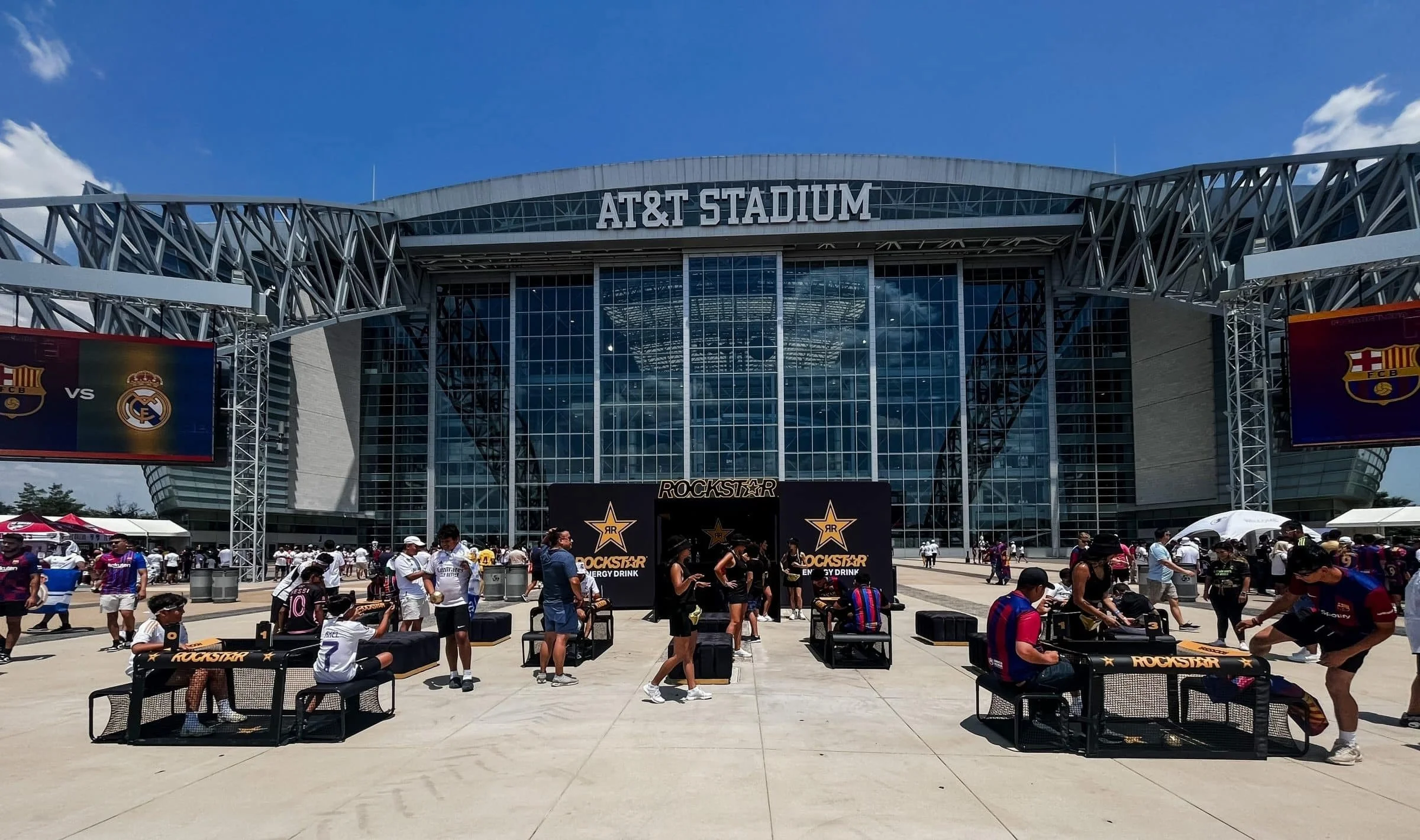
Winning that competition has little to do with placing a logo on a sideline banner. Instead, the brands making the biggest impression throughout the FIFA World Cup 2026 are creating experiences that fans actively seek out. They are giving supporters places to celebrate, games to play, products to try, and stories to become part of. As a result, many of these brand moments become as memorable as the match itself.
This year's tournament has shown how experiential marketing continues to evolve. Rather than relying on large sponsorship announcements, brands are investing in moments that feel local, personal, and highly interactive. In doing so, they are building genuine connections with consumers instead of simply increasing brand visibility. The result is a collection of activations that reveals where experiential marketing is headed next.
The World Cup Has Become a City-Wide Experience
One of the most interesting developments throughout the tournament is how the fan experience has expanded beyond official FIFA venues. Instead of concentrating activity inside stadiums, entire cities have become extensions of the World Cup, giving brands countless opportunities to connect with consumers in places they already spend time.
Retail parking lots have become soccer arenas filled with skill challenges and branded entertainment. Meanwhile, restaurants have transformed into destination watch parties with themed menus, live entertainment, and exclusive experiences. Public parks, shopping districts, and waterfronts have also hosted festivals where supporters gather long before kickoff and remain long after the match ends.
What makes these campaigns successful is their accessibility. Fans do not need expensive match tickets to feel involved. Instead, they simply need to show up. Because of this, brands are reaching audiences who might never attend a match in person but still want to experience the excitement surrounding the tournament.
This wider footprint also allows marketers to engage consumers repeatedly throughout the competition rather than during a single event. In turn, each interaction strengthens brand familiarity and creates additional opportunities for meaningful engagement.
The approach reflects an important shift in experiential marketing. Large audiences are no longer concentrated in one place. Instead, brands are following fan behavior instead of expecting fans to come to them. That shift is making campaigns feel more natural, more convenient, and ultimately more effective.
The Best Activations Invite Participation, Not Observation
Looking across the standout FIFA World Cup campaigns, one trend becomes impossible to ignore. Almost none of them ask people to simply watch.
Supporters are stepping onto mini soccer pitches to test their skills. They are competing in interactive challenges, creating personalized content, exploring immersive installations, collecting exclusive merchandise, and earning rewards through gameplay. As a result, every activity gives visitors a reason to stay longer and interact with the brand in a meaningful way.
Technology has strengthened these experiences without becoming the main attraction. Digital scoreboards, interactive displays, mobile booking systems, QR-powered rewards, and personalized content all serve one purpose. They place the fan at the center of the experience rather than positioning them as a spectator.
Instead of telling consumers they are part of the action, brands are letting them prove it. In doing so, they create something far more valuable than impressions or foot traffic. They build emotional investment. When someone actively participates in an experience, they are far more likely to remember both the moment and the brand behind it. Consequently, the interaction continues long after they leave the activation.
Brands Are Building Communities, Not Campaigns
The strongest World Cup activations are not built around products alone. Instead, they are built around shared experiences.
Soccer has always united people across cultures, languages, and generations. Because of this, many brands have embraced the tournament as an opportunity to strengthen community rather than simply promote products. Community watch parties have brought strangers together around a shared passion, while fan festivals have combined food, music, entertainment, and sport into day-long celebrations.
Some campaigns have taken this idea even further by linking volunteering and charitable initiatives with match days. As a result, supporters are given another reason to gather while contributing to causes within their local communities. These experiences create positive associations that extend well beyond the tournament itself.
Even product launches have followed this philosophy. Rather than introducing a new beverage, snack, or retail collection through traditional advertising, companies have wrapped those launches inside memorable experiences where fans naturally spend time with friends and family. Consequently, the product becomes part of the celebration instead of interrupting it.
When consumers associate a brand with moments of connection, excitement, and shared memories, loyalty develops more naturally than through advertising alone. That emotional connection is often what separates a successful activation from one that is quickly forgotten.
What Experiential Marketers Should Take Away from FIFA 2026
The FIFA World Cup has always inspired ambitious marketing campaigns, but this year's activations highlight a clear direction for the future of experiential marketing.
Accessibility matters more than exclusivity because bringing experiences into neighborhoods, retail spaces, and public gathering places allows brands to connect with far larger audiences than stadium-only activations ever could.
Participation consistently outperforms passive entertainment. After all, every successful activation gives visitors something to achieve, create, or experience for themselves. In turn, those interactions generate stronger memories and greater brand engagement.
Local relevance also drives stronger results. Rather than delivering identical campaigns across every market, many brands have adapted experiences to reflect the communities hosting fans. As a result, each activation feels connected to its surroundings instead of appearing as a one-size-fits-all campaign.
Finally, experiential marketing works best when the event becomes the backdrop rather than the entire story. The World Cup creates the excitement, but brands create the memories that surround it. That is where experiential marketing delivers its greatest value.
As the tournament continues, one thing is becoming increasingly clear. Fans remember great goals. They also remember the places they celebrated them, the experiences they shared with friends, and the brands that helped make those moments unforgettable. For experiential marketers, that is the opportunity worth chasing.
