
Experiential Marketing ROI in 2026: What Actually Drives Results
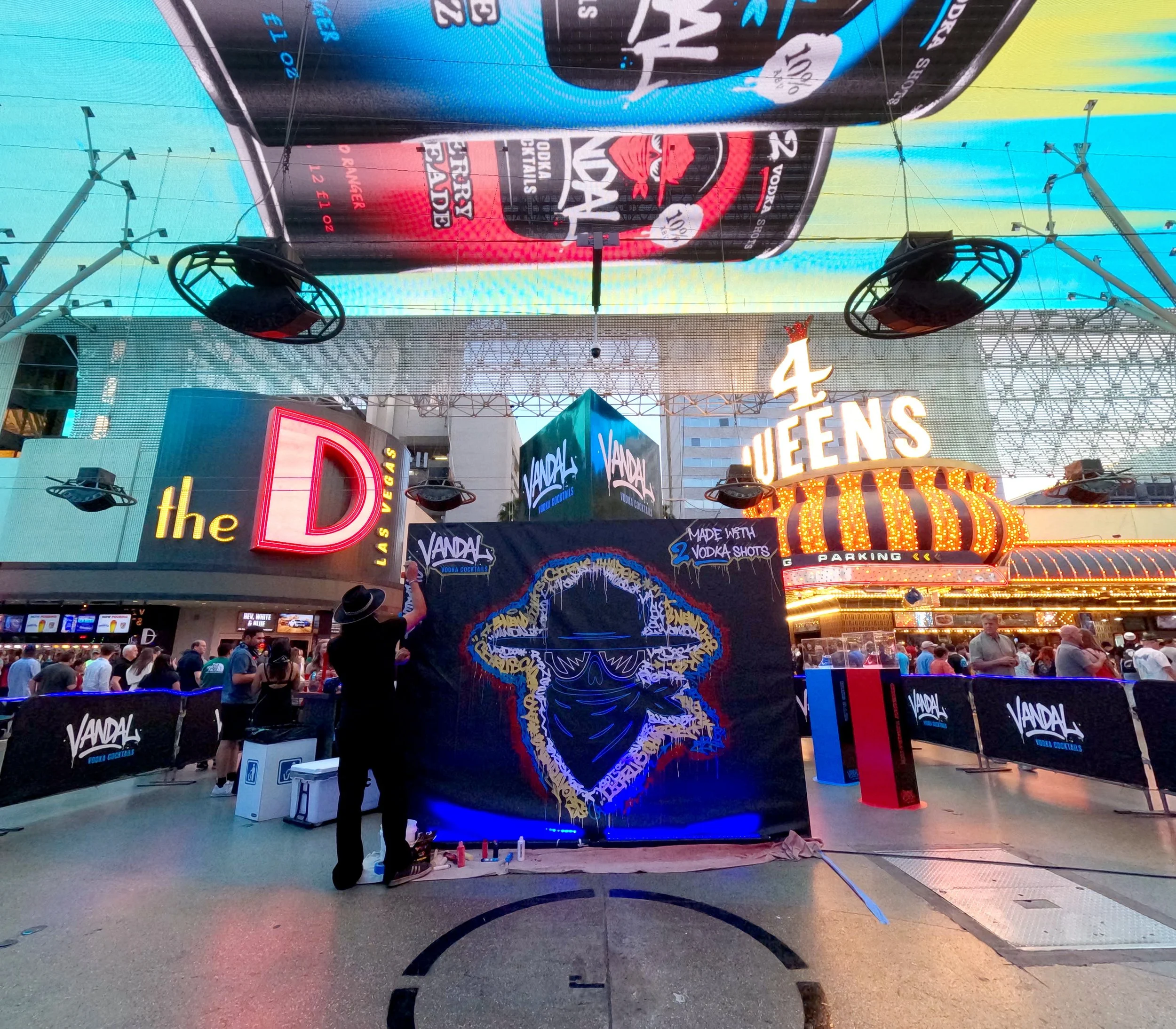
Brands are investing more in experiential marketing than ever before.
Product sampling tours. Mobile brand activations. Live consumer experiences. The category is growing, and so is the question every marketing team is asking:
What actually drives ROI?
Because a lot of experiential campaigns look great. They're beautiful, they're shareable, they generate buzz. But the ones that truly move the needle tend to have a few things in common.
Here's what we've seen separate high-performing experiential programs from the rest.
1. "Instagrammable" Is a Starting Point, Not a Strategy
Aesthetic matters. Shareability matters. Social amplification matters.
But the most effective brand activations are built around something more intentional.
High-performing experiential marketing campaigns are typically designed with:
Clear objectives — trial, awareness, data capture, or a combination
Intentional audience targeting — reaching the right people, not just the most people
Thoughtful consumer journeys — what do you want someone to feel, do, or remember?
When those elements are aligned, social content becomes a natural extension of the experience, not the sole purpose of it.
That's when experiential marketing campaigns stop being moments and start driving measurable outcomes.
2. Product Trial Remains One of the Most Powerful Conversion Tools
In a digital-first world, physical product interaction is still one of the most effective ways to build brand affinity.
That's why product sampling activations continue to outperform across categories like beverage, CPG, wellness, and beauty.
The strongest sampling programs share a few things in common:
They reach the right audience, not just the largest one
They show up in environments that make sense for the brand
They create interactions that feel genuine, not transactional
Done well, a product sampling tour can drive trial, word-of-mouth, and long-term brand loyalty in a way that digital advertising simply can't replicate.
3. Scaling Experiential Campaigns Requires the Right Infrastructure
Running a single activation is one thing.
Scaling that into a multi-city experiential marketing tour introduces a new layer of complexity, one that separates agencies with real operational depth from those without it.
As programs grow, so do the variables:
Permitting and compliance requirements across markets
Venue sourcing and local logistics
Field team training and consistency
Real-time visibility and problem-solving
The programs that perform most consistently at scale are supported by strong logistics infrastructure, flexible playbooks, and experienced on-site leadership. Without that foundation, even great creative falls apart in the field.
4. Brand Ambassadors Are Your Most Important Brand Touchpoint
For many consumers, a brand ambassador is their first and only in-person interaction with your brand.
That moment matters.
It influences whether they try the product, how they feel about the brand, and what they tell other people afterward.
The highest-performing experiential programs treat ambassador training as a strategic investment, not an afterthought:
Deep product knowledge and brand voice training
On-site leadership to support the team in real time
Consistency across every market and every shift
The human interaction is often what people remember most. It deserves that level of care.
5. The Best Programs Balance Reach and Depth
A common tension in field marketing is throughput versus experience quality.
Some programs optimize for volume, as many samples or interactions as possible. Others focus on fewer, more meaningful consumer moments.
The strongest experiential campaigns find a balance: meaningful scale without sacrificing the quality of the interaction. That balance doesn't happen by accident. It's built into the program design from the start.
6. Great Execution Is What Brings Great Ideas to Life
A smart concept is an important starting point.
But in experiential marketing, the idea is just the beginning.
Consistently high-performing programs are supported by:
Detailed pre-production planning
Flexible logistics infrastructure
Built-in contingencies for real-world variables
Ongoing optimization across markets and activations
Because once a campaign is live, the real work begins. Having the right foundation in place is what allows teams to adapt quickly, solve problems without disrupting the experience, and deliver consistently, market after market.
So What Actually Drives ROI in Experiential Marketing?
It's not one thing. It's how everything comes together.
Strategic program design. Operational depth. Consistent execution. Meaningful human connection.
When those elements align, experiential marketing doesn't just create memorable moments. It creates measurable impact.
How Evolve Activation Approaches Experiential Marketing
At Evolve Activation, we build experiential programs designed to perform in the real world, not just look good on paper.
From nationwide product sampling tours and mobile activations to brand ambassador programs and large-scale field marketing campaigns, our work is grounded in scalability, consistency, and thoughtful execution.
Because when a brand shows up in person, every detail matters.
Thinking about your next experiential campaign? Let's talk.